
July 2026 Las Vegas Housing Market Update: What Buyers and Sellers Need to Know
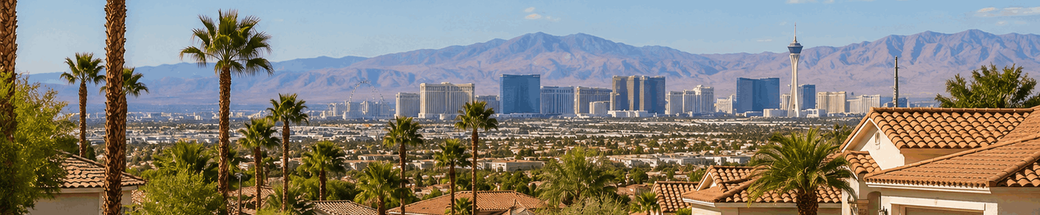
Is the Las Vegas Housing Market Crashing or Correcting?
Is the Las Vegas housing market crashing, correcting, or simply returning to normal?
That's one of the biggest questions buyers and sellers are asking as the market moves into the second half of 2026.
According to Michael Coxen, Las Vegas real estate broker, the answer is more nuanced than the headlines suggest.
The July 2026 Las Vegas housing market update, based on June 2026 housing data, reveals a market that is becoming more balanced, selective, and dependent on individual property conditions.
Single-family home prices remain stable. Closed sales have increased compared with last year. However, affordability continues to challenge buyers, and condos and townhomes are experiencing greater pressure.
National housing forecasts have also become more conservative as mortgage rates remain higher than previously expected.
The takeaway is straightforward: Las Vegas real estate isn't crashing, but the market is changing.
Why it matters:
Buyers and sellers need to understand the difference between a slowing market and a declining market.
Broad headlines can create unnecessary urgency or fear. Local data provides a clearer picture of what is actually happening.
Las Vegas Single-Family Home Prices Remain Stable
Despite concerns about a housing downturn, single-family home prices in Las Vegas have remained relatively steady.
According to the June 2026 Las Vegas housing figures discussed by Michael Coxen, the median single-family home closing price was $490,000.
June 2026 Las Vegas Home Prices and Sales Activity
The latest figures show:
- Median single-family home price: $490,000
- Month-over-month price change: 0%
- Year-over-year price increase: 1%
- Month-over-month closed sales increase: 11.4%
- Year-over-year closed sales increase: 18.3%
These numbers tell an important story.
While the market may feel slower than previous years, more single-family homes closed in June than during the same period last year.
Prices are not rising rapidly, but they're also not experiencing significant declines.
Michael describes this as a market where prices are holding relatively firm.
Inventory Is Increasing, but Supply Remains Balanced
At the end of June 2026, there were 7,147 single-family homes available, excluding properties already under contract.
That represents approximately 3.1 months of effective availability.
This is no longer the severe inventory shortage buyers experienced during the pandemic-era market.
However, it is also not a deeply oversupplied market.
Some price ranges remain competitive, while others offer buyers more negotiating room.
Why it matters:
For buyers, stable prices and more available homes can create opportunities to evaluate properties without the same urgency experienced in previous years.
For sellers, the data shows that demand still exists, but buyers are paying closer attention to value.
Why Condos and Townhomes Are Facing More Pressure
While single-family homes are holding relatively steady, condos and townhomes are experiencing a softer market.
In June 2026, there were 521 condo and townhome closings, representing a 1.2% increase compared with June 2025.
However, prices moved in the opposite direction.
Condo Prices, Inventory, and Buyer Competition
The June figures show:
- Median condo and townhome price: $292,000
- Year-over-year price decline: 4.3%
- Year-over-year closed sales increase: 1.2%
- Effective availability: 5.2 months
This is a noticeably different inventory environment than the single-family home market.
Buyers shopping for condos and townhomes may have more properties to compare and potentially greater negotiating opportunities.
However, several factors can influence a property's appeal:
- HOA fees and financial condition
- Insurance costs
- Financing requirements
- Property condition
- Community amenities
- Parking and usage restrictions
- HOA litigation or other community-specific concerns
For sellers, these details can make a meaningful difference in how buyers evaluate a property.
Why it matters:
The condo and townhome market requires a particularly careful pricing strategy.
Buyers have more alternatives, and sellers need to understand how their property compares with competing listings in the same community.
Why Pricing Strategy Matters More Than Ever for Sellers
One of the clearest themes in Michael Coxen's July 2026 market update is the importance of accurate pricing.
The days of listing a home well above market value and expecting buyers to compete for it are largely behind us.
Today's buyers are more payment-sensitive.
They're watching mortgage rates, comparing monthly payments, and evaluating resale properties against new construction incentives.
They're also paying attention to days on market and previous price reductions.
Why Overpriced Homes Are Sitting Longer
A home may struggle to attract offers for several reasons:
- The asking price is too high
- The property needs repairs
- The home doesn't show well
- Competing properties offer better value
- The marketing doesn't clearly communicate the home's strengths
Michael emphasizes that well-priced homes with strong presentation and effective marketing are still attracting interest.
The challenge isn't necessarily a lack of buyers.
It's that buyers have become more selective.
For sellers, that means focusing on four priorities:
- Price Against Today's Competition
Review current comparable sales and competing listings rather than relying on last year's prices.
- Make the Home Easy to Say Yes To
Condition, cleanliness, staging, photography, video, and accessibility for showings all influence buyer interest.
- Pay Attention to Early Feedback
If a home receives showings but no offers, the market may be signaling a concern about price, condition, or value.
If there are very few showings, the asking price or marketing strategy may need another look.
- Understand the Specific Property Segment
A single-family home in Summerlin competes in a different market than a high-HOA condo, luxury custom home, or new construction property.
Why it matters:
Sellers can still achieve successful outcomes, but the market is less forgiving of unrealistic expectations.
A thoughtful strategy from the beginning can help avoid unnecessary delays and repeated price reductions.
What Buyers Should Know About the July 2026 Market
For buyers considering moving to Las Vegas or purchasing a home within the Valley, current conditions offer more flexibility than the market did a few years ago.
There are more homes available, more opportunities to compare properties, and potentially greater room to negotiate.
In some cases, buyers may be able to request:
- Closing cost credits
- Seller-paid repairs
- Other seller concessions
- More favorable contract terms
However, Michael cautions against assuming that every seller is desperate to negotiate.
Many homeowners still have relatively low mortgage rates, substantial equity, and no immediate financial reason to sell.
How Buyers Can Find Better Negotiating Opportunities
The strongest opportunities often come from understanding the property's history and the seller's circumstances.
Buyers may want to evaluate:
- Homes with longer days on market
- Properties with previous price reductions
- Homes needing manageable cosmetic improvements
- Recent comparable sales
- The seller's motivation
- Available concessions
- Competing properties in the neighborhood
A well-priced home in a desirable location can still attract attention quickly.
That's why buyers need to balance patience with preparation.
The Importance of Neighborhood-Level Market Data
Not every Las Vegas neighborhood is experiencing the same conditions.
Michael highlights areas such as:
- Summerlin
- Henderson
- Green Valley
- Southern Highlands
- Skye Canyon
- The Lakes
A well-maintained home in one of these communities may attract different buyer interest than an older condo with high HOA fees.
The same applies to luxury homes, investment properties, and new construction.
Why it matters:
More inventory doesn't automatically mean buyers can name their price.
The better approach is to understand the property's value, evaluate the competition, and prepare an offer that reflects current conditions.
Why Life Changes Are Still Driving Las Vegas Home Sales
Mortgage rates and housing prices influence real estate decisions, but they're not the only reasons people move.
Michael Coxen points out that many purchases and sales are driven by major life changes.
People continue moving because they're:
- Getting married or starting families
- Relocating for work
- Changing careers
- Retiring
- Moving closer to family
- Looking for more or less space
- Seeking a different neighborhood or lifestyle
These needs don't disappear simply because mortgage rates remain elevated.
Instead, buyers and sellers become more thoughtful about when and how they make a move.
The Las Vegas housing market is becoming less driven by speculation and more influenced by individual needs.
Why it matters:
The decision to buy or sell should begin with personal circumstances, not just market predictions.
Understanding the financial implications of moving now versus waiting can help buyers and sellers make decisions that align with their long-term goals.
What to Expect From the Las Vegas Housing Market
As Las Vegas moves through the second half of 2026, mortgage rates remain one of the biggest factors influencing buyer demand.
National forecasts have become more conservative.
In the video, Michael notes that projected existing-home sales growth for 2026 was revised from approximately 14% to 4%, while mortgage rate expectations shifted from around 6% to 6.5%.
That suggests affordability may remain a challenge.
How Mortgage Rates Could Influence the Market
If mortgage rates decline meaningfully, some buyers who have been waiting may return to the market.
That could increase competition for desirable properties.
If rates remain elevated, the market may continue moving at a slower, more selective pace.
Either way, pricing, property condition, and negotiation will remain important.
Michael's assessment is that Las Vegas is not experiencing a widespread housing crash.
Instead, it is becoming a more segmented market where single-family homes are generally holding up better than condos and townhomes.
Why it matters:
Trying to predict the perfect moment to buy or sell can create unnecessary uncertainty.
A more practical approach is to understand current conditions, evaluate available options, and make decisions based on individual needs and financial circumstances.
Make Your Next Las Vegas Real Estate Move With Clarity
The July 2026 Las Vegas housing market update reinforces one important point: the market isn't crashing, but buyers and sellers need a more thoughtful strategy.
For buyers, increased inventory may create opportunities to negotiate and find a home that better fits their needs.
For sellers, accurate pricing, strong presentation, and understanding the competition are essential.
Whether you're relocating to Las Vegas, buying in Summerlin, selling in Henderson, or exploring opportunities elsewhere in the Valley, understanding the local market can help you make more informed decisions.
Michael Coxen brings local real estate experience and a practical, data-driven perspective to help buyers and sellers evaluate their options without getting caught up in market headlines.
Thinking about buying or selling a home in Las Vegas?
For Real Estate Professionals: Build a Business That Adapts to Changing Markets
A more balanced housing market requires more than simply working harder.
It requires discipline, clear communication, consistent habits, and the ability to guide clients through uncertainty.
Michael Coxen's approach to real estate coaching combines practical business strategy with mindfulness, leadership, self-awareness, and sustainable growth.
The same principles that help buyers and sellers navigate today's market also apply to building a successful real estate career.
Understanding the facts, managing expectations, and making thoughtful decisions are valuable skills in any market.
For agents who want to develop stronger systems, improve their decision-making, and build a business that can adapt as conditions change, coaching provides an opportunity to approach growth with greater intention.
Ready to build a more focused, consistent, and sustainable real estate business?
Explore Real Estate Coaching With Michael Coxen
Book a strategy call to discuss your next stage of growth.
FAQ
1. Is the Las Vegas housing market crashing in July 2026?
The June 2026 housing data discussed in Michael Coxen's July market update does not indicate a widespread crash. Single-family home prices remained at $490,000, up 1% year over year, while closed sales increased 18.3% compared with June 2025. The market is becoming more selective and balanced rather than experiencing widespread price declines.
2. Are Las Vegas home prices dropping in 2026?
It depends on the property type. Single-family home prices remained stable at $490,000 in June 2026, while condo and townhome prices declined 4.3% year over year to $292,000. Different segments of the Las Vegas market are experiencing different conditions.
3. Is July 2026 a good time to buy a home in Las Vegas?
Buyers have more inventory, additional time to evaluate properties, and potentially greater negotiating opportunities. However, competitively priced homes in desirable neighborhoods can still attract strong interest. The right time to buy depends on affordability, location, and individual goals.
4. How much housing inventory is available in Las Vegas?
In June 2026, there were 7,147 single-family homes available without accepted contracts, representing approximately 3.1 months of effective availability. Condos and townhomes had approximately 5.2 months of effective availability, indicating softer conditions in that segment.
5. Why are some Las Vegas homes sitting on the market?
Homes may remain on the market longer when their asking prices, condition, or presentation do not match buyer expectations. Buyers are increasingly comparing resale properties with competing listings and new construction incentives.
6. Should I sell my Las Vegas home in 2026 or wait?
The decision depends on the property's condition, location, competition, and the seller's personal circumstances. Homes priced competitively and presented well can still attract buyers, but sellers should evaluate current comparable sales rather than relying on previous market peaks.
Categories
Recent Posts











8488 Rozita Lee Ave, Bldg 3, Suite 100, C/O Kiln, Vegas, NV 89117, United States