
Should a $3M+ Summerlin Buyer Build Custom or Buy an Existing Estate?
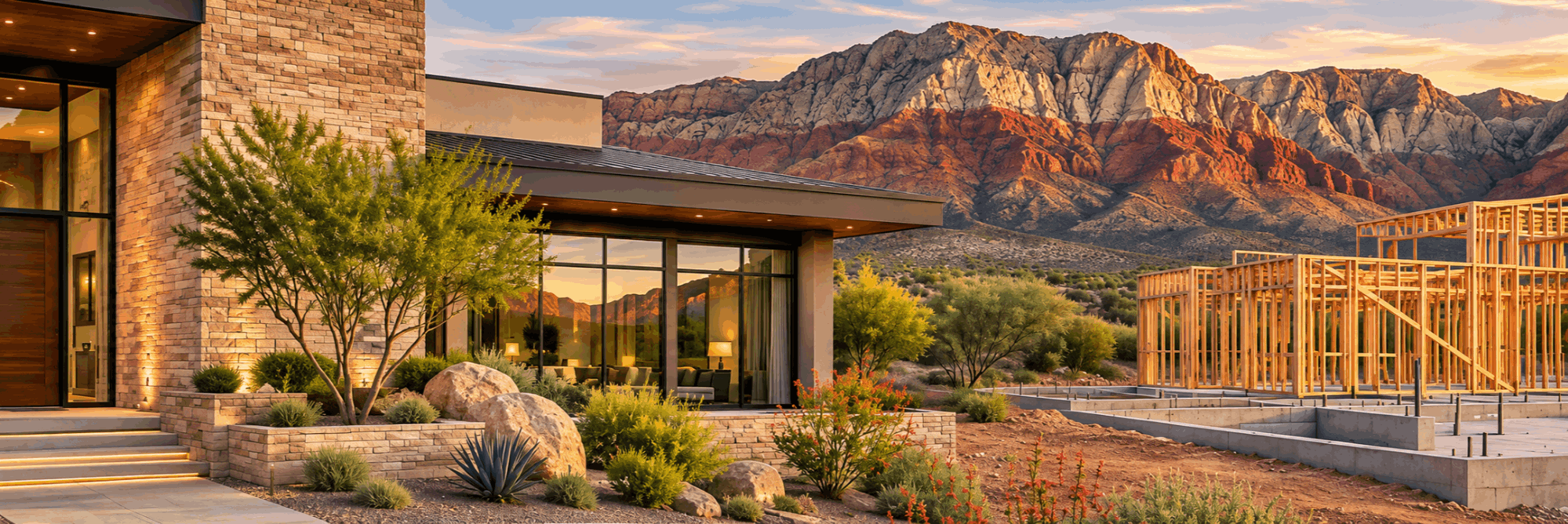
For a buyer planning a $3 million-plus Summerlin residence, the real choice is not simply new versus used. It is control versus certainty. A custom build can deliver the site plan, architecture, materials, privacy and daily function you want. An existing estate can offer a known neighborhood position, a completed home and a much shorter path to living there. The right answer depends on the specific lot, the finished alternatives available now and your tolerance for a multi-stage project.
Recent Southern Nevada luxury coverage points to the same shift: buyers increasingly value privacy, thoughtful design, functionality and a strong sense of place, not square footage alone. A finished estate can satisfy those priorities immediately. A custom project can shape them from the ground up.
Start With the Site, Not the Floor Plan
In Summerlin, the lot can be more important than the first architectural sketch. View direction, elevation, neighboring rooflines, privacy, solar exposure, grading, drainage, easements and access can determine what the site can support. A dramatic concept is only useful if it fits the parcel and the governing rules.
Before treating a lot as a blank canvas, verify zoning, recorded restrictions, utilities, community design standards and the approval process. Clark County's single-family permit guide says plan review can include setbacks, height, parking, landscaping, walls, lot coverage, easements, drainage and grading. Community architectural review is a separate layer that must be confirmed for the parcel.
An existing estate has already resolved much of that site risk. The tradeoff is that the orientation, privacy strategy and relationship to neighboring homes are fixed. Buyers should evaluate the house and the land together rather than paying for finishes while overlooking the site.
Compare Total Project Cost With Total Ownership Cost
The asking price of a finished home and the price of a vacant lot are not comparable. A custom budget may include land, architecture, engineering, surveys, design review, permits, site preparation, utilities, construction, landscaping, interior design, technology, carrying costs and temporary housing.
The existing-estate calculation has its own second layer. Add inspections, repairs, renovation, furnishings, technology upgrades and the cost of changing someone else's design. A completed estate may command a convenience premium, but it can also reduce construction-cost exposure and decision fatigue.
Do not rely on a generic cost-per-square-foot claim for either path. Written bids, allowances and exclusions matter. So do current comparable sales for completed homes and current lot evidence. A buyer should know which costs are fixed, which are allowances and which remain open-ended.
Timeline Is a Financial and Lifestyle Variable
Clark County publishes a first-review goal of 21 days for a custom single-family residence, but that is not a promise of permit issuance or total project duration. Design development, community review, corrections, engineering coordination, contractor scheduling, material lead times, inspections and change orders all sit outside that single benchmark.
An existing-home purchase usually creates a clearer sequence: contract, diligence, financing if applicable, closing and any planned renovation. It is not risk-free, but the buyer can inspect a physical structure and establish a more defined move-in plan.
For relocating executives, second-home buyers or households coordinating a sale in another state, time can be part of the luxury. A custom build may be worth the wait when design control is the priority. A finished estate may be worth more when certainty and near-term use matter most.
When Custom Building Makes More Sense
Custom construction is strongest when the buyer has a specific site opportunity and a program that the current resale market does not satisfy. That may include a precise indoor-outdoor relationship, a particular garage configuration, separate guest or work zones, accessibility planning, acoustic privacy, wellness spaces or technology infrastructure designed as one system.
It also fits buyers who enjoy the process, can make decisions on schedule and have a professional team capable of managing the details. The buyer should be comfortable with contingencies, allowances and the possibility that the final cost or move-in date changes.
The decision should still be tested against resale evidence. Personalization has value to the owner, but not every custom choice produces the same value for a future buyer.
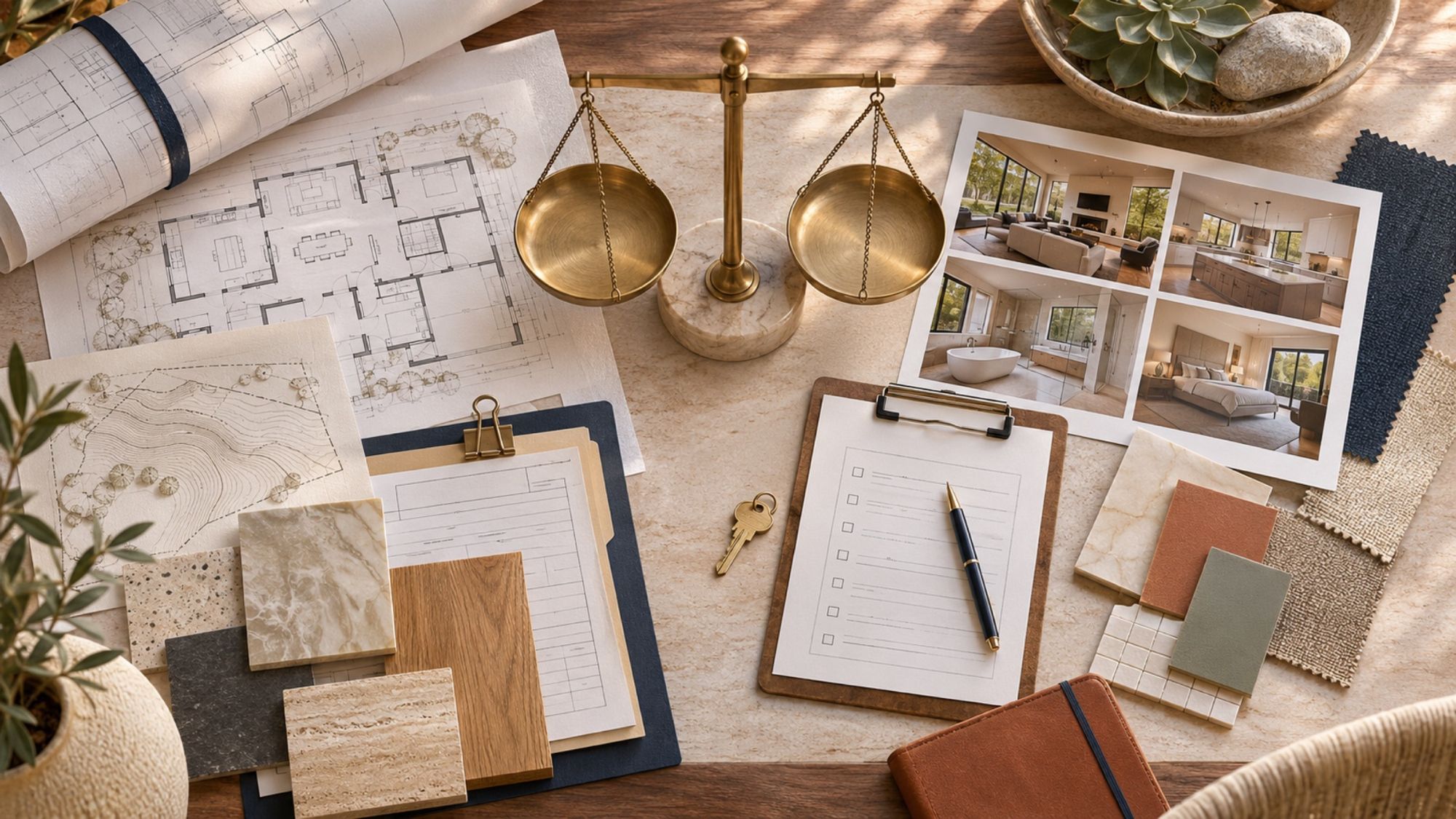
A conceptual decision table comparing custom design work with the diligence required for an existing estate.
When an Existing Estate Makes More Sense
A finished estate can be the better choice when the lot, views, privacy and floor plan are already difficult to replicate. Mature landscaping, established neighboring homes and a known view corridor can carry value that is easy to underestimate when comparing a resale with an undeveloped parcel.
An existing home also gives the buyer a real inspection target. Roof, structure, mechanical systems, windows, pool, automation and finish quality can be evaluated before closing. The buyer can then separate necessary work from optional design changes.
The best resale candidate is not necessarily the newest or most heavily renovated. It is the home whose site and bones align with the buyer's priorities, with a renovation scope that remains rational relative to the purchase price and completed value.
Use a Property-Specific Decision Matrix
For each serious option, compare the same categories:
- Site quality, views, privacy and neighboring conditions
- Total acquisition or project cost, including contingencies
- Time to occupancy and temporary-housing needs
- Design control and functional fit
- Community review and permit requirements
- Construction or renovation management burden
- Warranty, condition and near-term capital needs
- Resale evidence for the finished result
A broad market statistic cannot make this decision. Las Vegas REALTORS reported a $470,000 median for existing single-family homes across Southern Nevada in September 2026, but that valleywide figure does not describe the $3 million-plus Summerlin segment. Current MLS evidence for comparable estates and lots is essential before making a property-level recommendation.
Frequently Asked Questions
Is a custom Summerlin home always more expensive than an existing estate?
No. The outcome depends on the lot, architecture, site work, specifications, bids, carrying costs and the finished alternatives available at the same time. Compare complete budgets, not land price with home price.
How long does a custom build take in Summerlin?
There is no responsible universal answer. County review goals cover only part of the process. Community design review, corrections, contractor availability, construction complexity and materials can materially change the schedule. Use a written project timeline from the actual team.
Can I remodel an existing estate instead?
Often, yes. Remodeling can preserve a superior lot and shorten the path to the right home, but scope, structural limits, community rules and occupancy disruption must be evaluated first.
Which Summerlin neighborhoods allow custom homes?
Custom opportunities exist in select communities, but availability and rules change by parcel and association. Verify current lot inventory, recorded documents and architectural standards before relying on a neighborhood-level assumption.
The Bottom Line
Build custom when the site and design opportunity justify the added time, decisions and uncertainty. Buy an existing estate when the land, architecture and speed to occupancy are hard to reproduce. Coxen & King can help compare current Summerlin estates, available lots and the evidence behind each path so the decision reflects the property, not a generic rule.
Categories
Recent Posts








8488 Rozita Lee Ave, Bldg 3, Suite 100, C/O Kiln, Vegas, NV 89117, United States