
Will Your Las Vegas Home Sell Within 60 Days?
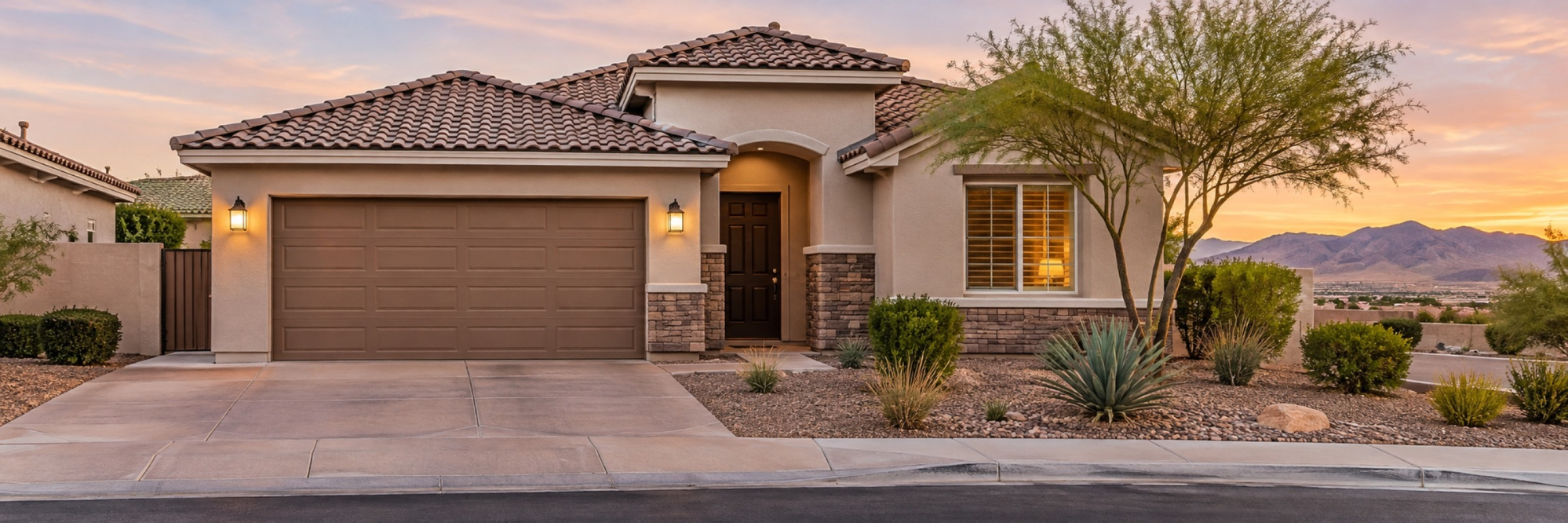
A market-ready Las Vegas home can still attract decisive buyers when price, condition, and presentation align.
Nearly six months of housing supply sounds slow. Yet Las Vegas REALTORS reported that 72.4% of existing single-family homes sold in October 2026 closed within 60 days. Those facts are not contradictory. Months of supply describes the relationship between the available inventory and the recent sales pace across a broad market. The 60-day figure describes how quickly the homes that actually sold reached closing.
For a Las Vegas homeowner, the practical question is not whether the market is fast or slow in the abstract. It is whether your home is positioned to become part of the group that sells, rather than part of the inventory that remains available without an offer.
What does the 60-day statistic really measure?
LVR reported that 72.4% of existing local single-family homes sold within 60 days in October, up slightly from 71.7% one year earlier. The statistic covers closed sales, so it does not include every listing that expired, was withdrawn, or remained active at month-end. It also does not mean every successful seller received an offer immediately. A transaction can spend time under contract before closing.
Use the number as evidence that buyers are still acting when a property meets the market. Do not treat it as a promise that any list price will produce a sale within two months.
Why can homes sell quickly when inventory is higher?
Southern Nevada ended October with 8,112 single-family homes listed without an offer, 7.6% more than one year earlier. LVR also reported 1,895 total existing home, condo, and townhome sales during the month, down from the prior year. The sales pace equated to nearly six months of supply.
More choice gives buyers room to compare. It does not make every home interchangeable. A clean, well-presented property with a defensible price can stand out against homes that need work, have difficult showing schedules, or are priced from a past market. Buyers may move quickly on the best option while passing over several weaker alternatives.
Mortgage costs still shape that comparison. Freddie Mac reported a 7.11% average 30-year fixed mortgage rate on November 12. At that level, many buyers are sensitive to monthly payment, concessions, taxes, HOA costs, insurance, and immediate repair expenses. A home that feels overpriced by even a modest amount may lose urgency.
What determines whether your home joins the faster-selling group?
Start with the buyer's real alternatives. Compare active, pending, and recently closed homes in the same neighborhood, school pattern, property type, size range, condition, and price band. A valleywide median cannot price a specific home in Summerlin, Henderson, Northwest Las Vegas, or the Arts District.
The strongest launch usually combines:
- A list price supported by matched recent sales and current competition
- Repairs and maintenance completed before photography and showings
- Clean, bright presentation with unnecessary belongings removed
- Professional images that set accurate expectations
- Easy showing access during the first two weeks
- Clear information about HOA, solar, upgrades, permits, and included items
- A planned response to early feedback and competing listings
The first days matter because the newest qualified buyers and their agents notice a fresh listing quickly. If the home reaches the market with avoidable objections, the seller may spend the most valuable attention window explaining problems that could have been solved before launch.

A 60-day sale plan begins before the listing date with pricing, preparation, photography, access, and feedback checkpoints.
How should a seller plan the first 60 days?
Before day one
Confirm the competitive set, decide which repairs improve marketability, prepare disclosures and property documents, and complete photography only after the home is ready. Review the likely net proceeds at the target price and at a realistic adjustment price.
Days one through fourteen
Track showing volume, repeat visits, buyer objections, and new competing listings. Feedback is most useful when patterns emerge. One comment may be personal preference. Five similar comments about condition or price require attention.
Days fifteen through thirty
Compare the listing with homes that went pending after your launch. If buyers consistently choose another option, identify the reason. It may be price, condition, location, presentation, or terms. A strategic correction is more effective than waiting for the listing to become familiar.
Days thirty-one through sixty
Recalculate the competitive position using fresh actives, pendings, and closings. Decide whether the current strategy still supports the seller's timing and proceeds. Do not reduce the price automatically because a calendar date arrived. Adjust when the evidence shows the home is outside the buyer's preferred range.
Does nearly six months of supply mean buyers should wait?
More inventory improves selection and negotiation leverage, but the best-matched homes can still move quickly. A buyer should compare days on market, price changes, condition, concessions, and competition for the specific property. Waiting solely because a valleywide supply figure sounds high may mean losing a home that was priced correctly.
The same logic applies to sellers. A broad market with more inventory requires sharper execution, not panic. The goal is to make the home's value easy to understand and its transaction easy to complete.
The Practical Answer
Yes, a Las Vegas home can sell within 60 days in the current market. LVR's October data show that most closed single-family sales did. But that outcome depends on becoming one of the homes buyers select. Price against today's competition, remove avoidable objections, make access simple, and respond to evidence early.
Coxen & King can build a property-specific launch plan using matched Las Vegas real estate sales, active competition, likely buyer objections, and a 60-day decision calendar.
Questions Las Vegas Sellers Ask
1. Should I price high and negotiate later? A price that misses the matched range can reduce early traffic and weaken urgency. Build negotiation room only when the competitive evidence supports it.
2. Is 60 days the same as days on market? No. LVR's statistic describes sales closed within 60 days. Contract and closing time can be part of that period.
3. When should I consider a price adjustment? When showing activity, feedback, new pendings, and competing price changes consistently show that buyers see stronger value elsewhere.4. Do concessions mean the price was wrong? Not necessarily. Buyers may value a rate buydown or closing-cost credit more than an equivalent price reduction. Compare net proceeds and appraisal risk.
Categories
Recent Posts










8488 Rozita Lee Ave, Bldg 3, Suite 100, C/O Kiln, Vegas, NV 89117, United States